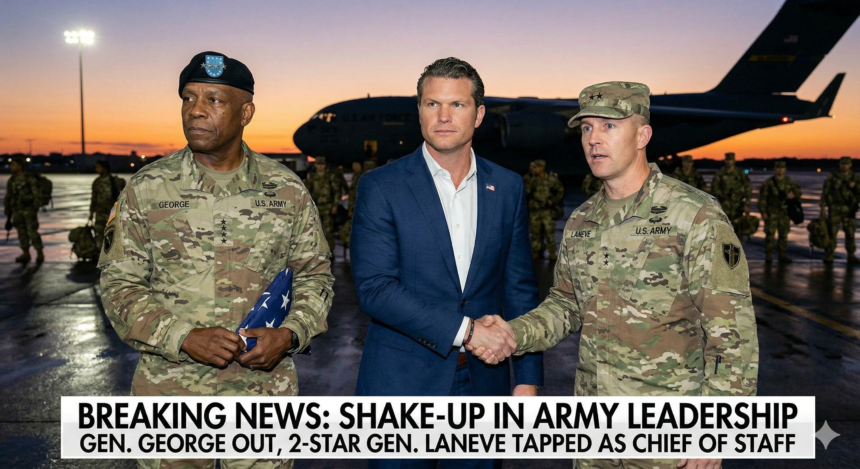
Defense Shake-up: Hegseth Ousts Army Chief of Staff Amid Middle East Escalation
WASHINGTON, D.C. — In a move that has sent shockwaves through the Pentagon and the global defense community, Secretary of Defense Pete Hegseth has dismissed General Randy George as Army Chief of Staff, effective immediately. The firing comes at a precarious moment for U.S. national security, as units from the 82nd Airborne Division are currently deploying to the Middle East in response to rising regional tensions.
The Department of Defense has not provided an official reason for the abrupt termination of the Army’s top officer. While leadership changes occur, the removal of a Chief of Staff during active operational deployments is a rare occurrence that has raised questions among lawmakers and military analysts alike.
The Meteoric Rise of General Christopher LaNeve
In a move that many are calling an unprecedented “space elevator ride” through the military hierarchy, Hegseth has tapped General Christopher LaNeve to lead the Army.
The appointment is drawing intense scrutiny due to the speed of LaNeve’s ascent. Just two years ago, LaNeve held the rank of a two-star Major General. His jump to a four-star position and the role of Chief of Staff bypasses several tiers of more senior officers, marking one of the most rapid promotions in modern military history.
A Pattern of Mass Firings
General George is the latest in a series of high-profile departures orchestrated by Secretary Hegseth. Since taking office, Hegseth has overseen more than a dozen major “firings” or forced retirements of top brass.
This internal purge extends beyond combat leadership. Recently, Hegseth axed the Army’s Chief of Chaplains. This followed a controversial policy directive in which the Secretary argued that military chaplains should prioritize spiritual guidance and “focusing on God” over modern mental health and trauma counseling initiatives.
Wartime Readiness or Institutional Instability?
The timing of these leadership overhauls has sparked a heated debate regarding U.S. wartime readiness. Critics argue that “mass firings” and the dismantling of mental health support structures during an active deployment could destabilize the chain of command and affect troop morale.
“Nothing says wartime readiness like clearing out your most experienced leaders and telling trauma counselors to stop counseling,” said one former defense official, speaking on the condition of anonymity.
Supporters of the Secretary, however, suggest that Hegseth is moving aggressively to “de-bureaucratize” the Pentagon and return the Army to a traditional warrior ethos, unencumbered by what he views as “woke” institutional policies.
As the 82nd Airborne heads toward a volatile Middle East, the Army finds itself under the command of a newly minted leader and a Secretary of Defense who is clearly not finished reshaping the American military in his own image.
Recommended Reading: